Service 05 — Concrete

Commercial concrete sidewalks & walkways.

Star's concrete crews build commercial sidewalks and walkways that stay flat, drain properly, and meet ADA requirements — new installations, replacement of deteriorated sections, and trip-hazard elimination for properties where foot traffic never stops. Clean forms, correct joints, and finishes that hold up to weather and wear.

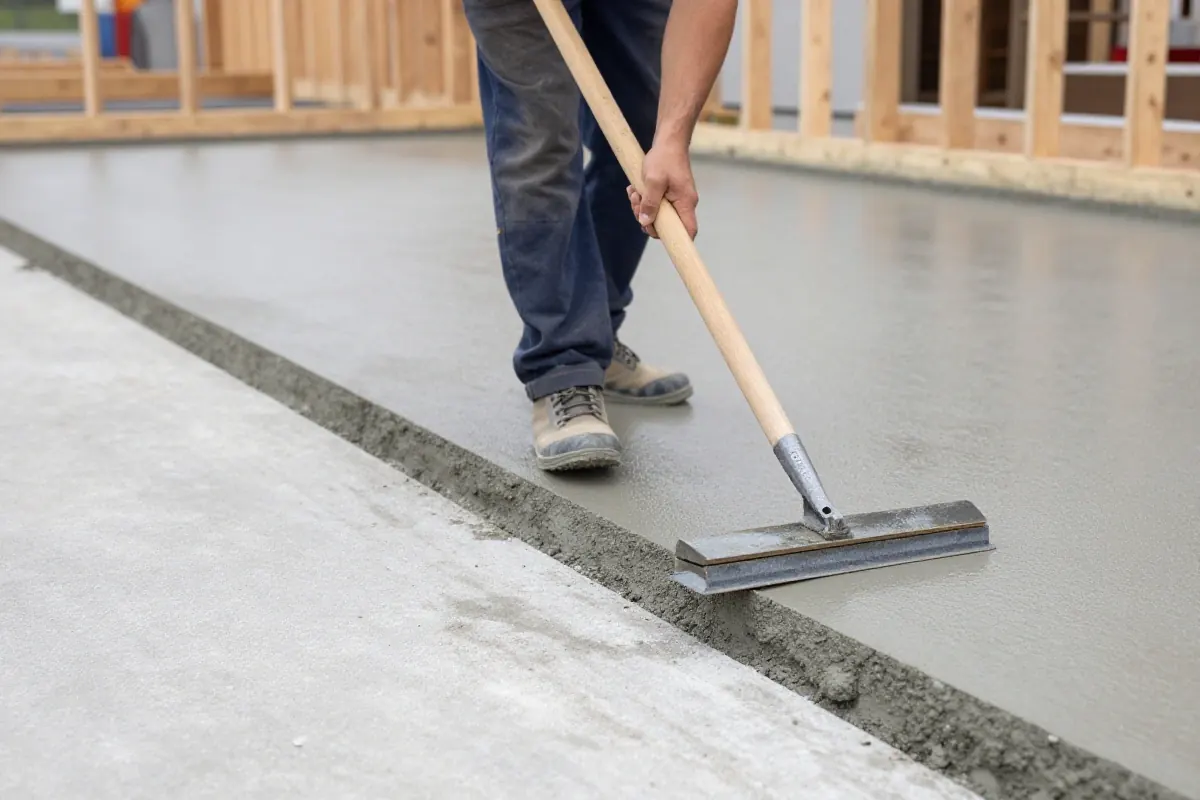
Concrete finisher floating a freshly poured commercial sidewalk with clean formwork

What our sidewalk service includes

  • New sidewalk installation — compacted subgrade, correct thickness for the traffic, and reinforcement where conditions call for it.
  • ADA-compliant grades & cross-slopes — walkways built to accessible running and cross-slope limits, tied into compliant curb ramps at every transition.
  • Trip hazard repair & grinding — lifted joints ground flush or sections replaced, with documentation for your risk file.
  • Section replacement — deteriorated, heaved, or root-damaged panels cut out and re-poured to match the existing walk.
  • Finishes & joints done right — broom finishes for traction, exposed aggregate where design calls for it, and control joints placed so cracking happens where we planned, not where it wants.
Request a Sidewalk Assessment

When does a cracked sidewalk become a legal problem?

Sooner than most owners think. A vertical displacement of about a quarter inch between panels is where accessibility standards and most municipal codes start treating a sidewalk as a trip hazard — and where slip-and-fall attorneys start winning. Add ponding water, spalled surfaces, or a heaved panel at a storefront entrance, and a maintenance item becomes a claim generator.

The fix is rarely "replace everything." Displaced joints under about an inch and a half can often be ground flush the same day; failed panels get cut out and re-poured individually; and chronic heaving usually traces to drainage or roots we can address during replacement. We survey the full walk, classify each defect, and quote grinding versus replacement panel by panel — the approach municipalities and schools and HOA communities use to spread sidewalk budgets across seasons without leaving hazards open. Where walks meet parking areas, we handle the asphalt transitions too — one crew, no seams between contractors.
How It Works

Our concrete process.

Walk Survey

Every panel graded: sound, grind, or replace — with photos and measurements.

Panel-by-Panel Quote

Itemized pricing so you can phase work across budget cycles.

Form & Pour

Pedestrian detours maintained; pours sequenced so entrances stay accessible.

Cure & Open

Foot traffic typically returns in 24–48 hours; full cure documented.

Common Questions

Concrete sidewalk FAQs.

Repair, grind, or replace — how do you decide?
Displacement under roughly 1.5 inches with sound concrete usually means grinding — fast and cheap. Cracked-through, spalled, or badly heaved panels get replaced. Surface-only flaws can sometimes be patched. Our survey classifies every panel so you only pay for what each one needs.
How long before a new sidewalk can be used?
Foot traffic is typically fine at 24–48 hours, and concrete reaches most of its design strength within 7 days. We barricade cleanly, keep an accessible route open through the work, and confirm opening times in writing.
What makes a sidewalk ADA compliant?
The essentials: a firm, stable, slip-resistant surface; adequate clear width; running slope and cross-slope within accessible limits; no vertical changes over a quarter inch; and compliant curb ramps wherever the walk meets a street or parking area.
Why did my last contractor's sidewalk crack in a year?
Almost always subgrade or joints: concrete poured over loose fill settles and cracks, and slabs without properly spaced control joints crack wherever stress decides. Correct base compaction and joint layout are boring — and they're the whole game.

Get your walkways safe and compliant.

Free panel-by-panel survey with itemized pricing — grind, repair, or replace, documented.